Athletic performance: Speed, strength, agility and endurance
Learn how speed, strength, agility and endurance shape athletic performance, and why youth test results need growth and maturity context.

· 5 min read
Key points
- Physical qualities work together but do not replace one another.
- Agility includes a response to a cue, not just a planned change of direction.
- Youth test results need context about growth, maturity and experience.
Athletic performance includes linked qualities such as speed, strength, agility and endurance. Each sport uses them in different ways. Growth, maturity and practice also affect youth results.[1,2,4,7] So one test or age-group ranking cannot show an athlete’s whole potential.
The phrase “very athletic” can mean fast running or high jumping. Yet these tasks do not measure the same quality. First, name the quality you mean. Then look at its role in the sport and the athlete’s stage of growth.
How do strength and power differ?
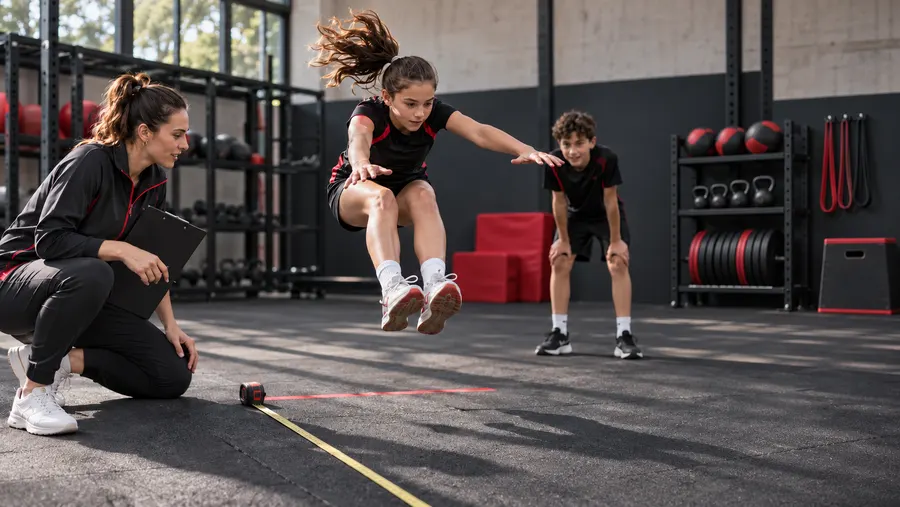
Strength is the ability to produce force against resistance. Power links force with speed. For example, a jump or sprint start needs force in a short time. So both the amount of force and how fast it is produced matter.[1]
Suchomel and colleagues link greater strength with sprinting, jumping and change of direction.[1] They also discuss sport-specific tasks. But a link does not promise the same result or gain for every athlete.
Strength is an important base. Still, skill, decisions and sport-specific practice matter too. For example, strength work does not replace sprint running.[2]
Can speed improve?
Training can improve some factors that affect speed. Haugen and colleagues discuss power, technique and sprint-specific endurance.[2] But inherited traits also play a role. So no programme can promise the same speed gain for everyone.
Sprint running and high-speed movements matter for sprint development.[2] Strength work can also help. First, assess the athlete’s level and needs. Then plan the work with a qualified coach.
Growth can change youth results too. Meyers and colleagues studied 336 boys aged 11–15.[3] Top sprint speed rose around and after the growth spurt. But this finding does not apply in the same way to all ages or children.
In earlier groups, longer steps did not lead to the same rise in speed.[3] Step rate and ground contact time also changed. So a period with no clear speed gain is not, on its own, a failure.
Is agility just a change of direction?
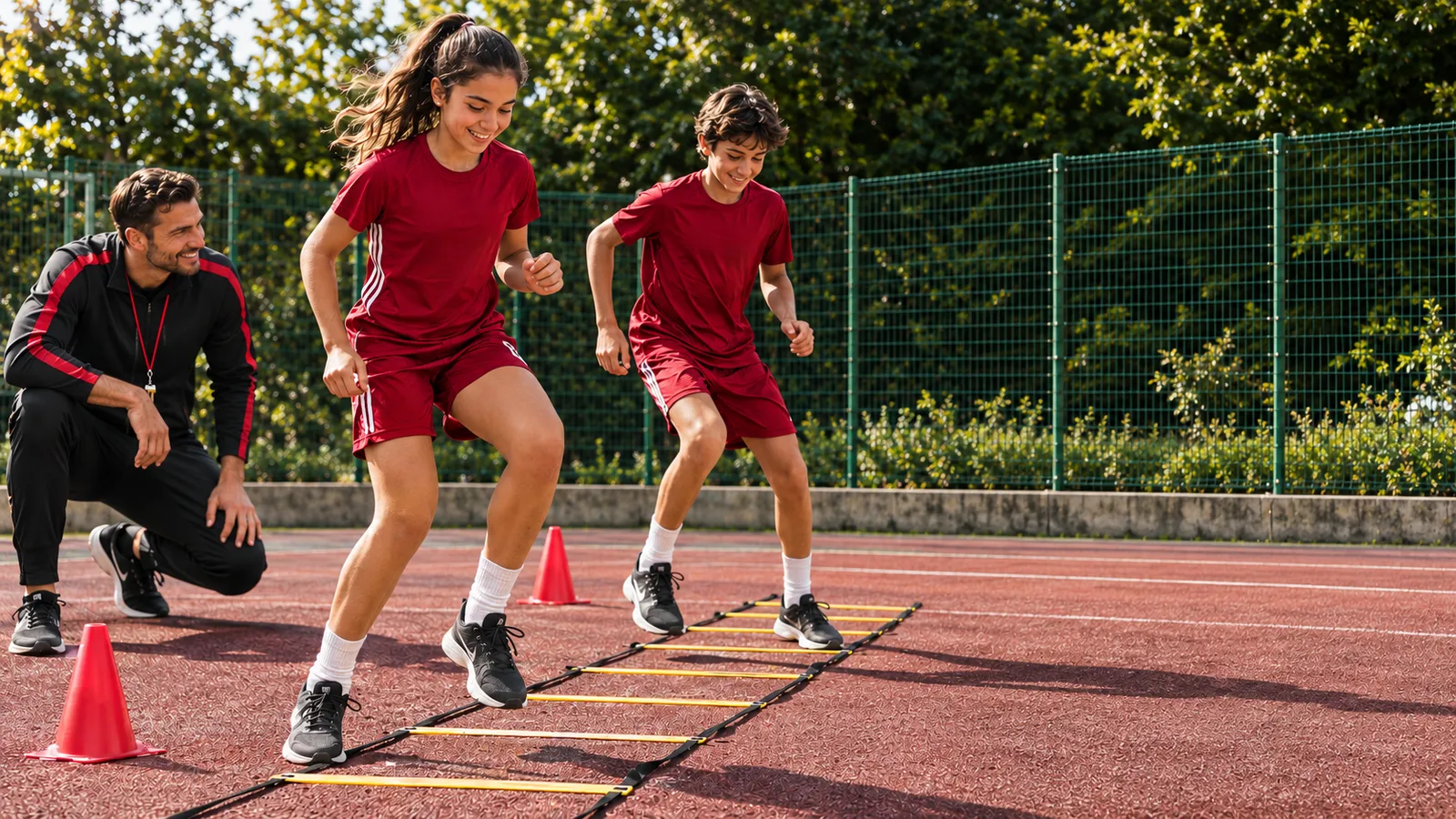
Agility involves a change of speed or direction in response to a cue.[4] An athlete who reads an opponent’s movement must make a choice. In contrast, a known cone course mainly tests planned change-of-direction speed.
Sheppard and Young discuss both physical and mental aspects.[4] Strength, power and technique support the physical side. Visual search and anticipation also matter. A fast course time cannot show the whole skill of making choices in a match.
First, ask whether the test includes a cue. Then check whether it tests a choice as well as a movement. This helps explain what an “agility” score means.
What supports endurance?
Endurance is the ability to keep up a defined task or pace. Joyner and Coyle discuss three linked factors: oxygen uptake, threshold and efficiency.[5] These terms can help readers understand a report:
VO2max: The highest rate of oxygen use during intense exercise.
Lactate threshold: A measure linked to lactate build-up as effort rises. It helps describe a pace the athlete can sustain.
Efficiency: The energy and oxygen needed for a given speed or power output.
So a high VO2max alone cannot predict a race result. How the athlete uses that capacity matters too. Motivation and social factors also play a role.[5]
How do athletic performance qualities interact?
Strength, speed and agility are linked, but none replaces the others. Greater strength may support sprinting.[1,2] Agility also needs decisions.[4] Improving one quality will not raise every skill by the same amount.
Lesinski and colleagues pooled 43 studies in youth athletes.[6] They reported moderate effects on strength and vertical jump. Effects on straight-line sprinting, agility and sport-specific tasks were smaller. Read these findings in the context of the groups and programmes studied.
Why do athletes develop at different rates?
Starting level, inherited traits, experience and maturity differ. So the same programme does not produce the same response in everyone.[1,2,6,7] First, look at the person’s history and current needs. Then track change over time.
Also, early performance is not proof of future adult success. Haugen and colleagues discuss the limits of this link.[2] Do not label a child as lacking talent based on one test.
How should age and maturity be considered?
Calendar age is not the same as biological maturity. Lloyd and Oliver explain the limits of relying only on age groups.[7] The NSCA statement also supports individual, child-centred development for all young people.[8]
Children outside organised sport need chances to move too. Games can include running, jumping, throwing and changes of direction. But adapt expectations to each child. If pain or a health concern arises, seek qualified health advice.
What should parents and coaches ask?
First, ask about the target quality, test scope and follow-up plan. These questions put the broad development approach into practice.[2,4,7,8]
Which physical quality does this activity target?
Does the test assess movement, decisions or both?
How do age, maturity and experience affect the result?
When and under what conditions will we review progress?
Explore Athletic Labs testing across 25 sports and our guide to development reports. To clarify your club’s needs, speak with the team.
References
- Suchomel TJ, Nimphius S, Stone MH (2016). The importance of muscular strength in athletic performance. Sports Medicine, 46(10), 1419-1449. https://doi.org/10.1007/s40279-016-0486-0
- Haugen T, Seiler S, Sandbakk Ø, et al. (2019). The training and development of elite sprint performance: an integration of scientific and best practice literature. Sports Medicine - Open, 5(1), 44. https://doi.org/10.1186/s40798-019-0221-0
- Meyers RW, Oliver JL, Hughes MG, et al. (2015). Maximal sprint speed in boys of increasing maturity. Pediatric Exercise Science, 27(1), 85-94. https://doi.org/10.1123/pes.2013-0096
- Sheppard JM, Young WB (2006). Agility literature review: classifications, training and testing. Journal of Sports Sciences, 24(9), 919-932. https://doi.org/10.1080/02640410500457109
- Joyner MJ, Coyle EF (2008). Endurance exercise performance: the physiology of champions. The Journal of Physiology, 586(1), 35-44. https://doi.org/10.1113/jphysiol.2007.143834
- Lesinski M, Prieske O, Granacher U (2016). Effects and dose-response relationships of resistance training on physical performance in youth athletes: a systematic review and meta-analysis. British Journal of Sports Medicine, 50(13), 781-795. https://doi.org/10.1136/bjsports-2015-095497
- Lloyd RS, Oliver JL (2012). The Youth Physical Development model: a new approach to long-term athletic development. Strength and Conditioning Journal, 34(3), 61-72. https://doi.org/10.1519/SSC.0b013e31825760ea
- Lloyd RS, Cronin JB, Faigenbaum AD, et al. (2016). National Strength and Conditioning Association position statement on long-term athletic development. Journal of Strength and Conditioning Research, 30(6), 1491-1509. https://doi.org/10.1519/JSC.0000000000001387
This article is for general information and does not replace diagnosis or treatment. Consult a professional about health problems and training plans.